Java can look surprisingly manageable on a map. Jakarta sits in the west, Yogyakarta near the centre, and Mount Bromo, Ijen, and Banyuwangi stretch toward the eastern end of the island. Once you begin planning, however, the distances tell only part of the story.
Traffic around major cities, limited train departures, early-morning mountain tours, changing weather, and transfers between stations, hotels, and trailheads can make a Java trip more complicated than expected.
A practical Java adventure travel guide should therefore do more than list famous places. It should help you decide which destinations work well together, how long each transfer may take, and where you need extra time in your itinerary.
For most travellers, the best Java journey is not the one that includes the most attractions. It is the one that leaves enough time to experience each place without spending every day rushing between check-in counters, stations, and mountain roads.
What This Java Adventure Trip Covers
Java offers a mix of volcanic landscapes, historic temples, dense cities, traditional villages, beaches, waterfalls, and national parks. The island is also home to several of Indonesia’s best-known destinations, including Borobudur, Prambanan, Mount Bromo, and the Ijen volcanic area.
A complete trip across Java might include:
- City experiences in Jakarta, Bandung, Semarang, Surabaya, or Malang
- Cultural stops in Yogyakarta and Solo
- Temple visits at Borobudur and Prambanan
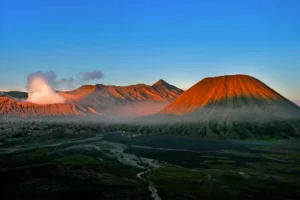
- Sunrise trips around Mount Bromo
- Waterfalls and highland scenery in East Java
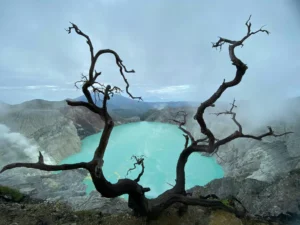
- An early-morning Ijen hike
- A final transfer to Bali through Banyuwangi and Ketapang
Trying to include all of these in a short holiday can result in a trip that feels more like a transport challenge than an adventure.
A better approach is to divide Java into practical travel zones.
Western Java
Western Java works well for travellers interested in Jakarta, Bandung, volcanic highlands, tea plantations, hot springs, and cooler mountain areas.
It is also a practical starting point for international visitors arriving through Jakarta.
Central Java and Yogyakarta
Central Java and Yogyakarta are the strongest choices for cultural travel. This region combines temples, traditional arts, local food, royal heritage, and relatively compact day-trip options.
Borobudur and Prambanan are the main attractions, but the area also works well for travellers who want a slower combination of villages, museums, markets, and countryside.
Eastern Java
Eastern Java is usually the most adventure-focused section of the island.
Mount Bromo, waterfalls around Malang and Lumajang, the Ijen area, Baluran, and the overland connection to Bali are all located here.
The distances between destinations can still be significant, so an East Java itinerary needs careful sequencing.
Who This Trip Is For
A Java adventure trip suits travellers who enjoy active days, early starts, regional food, long-distance transport, and a combination of culture and nature.
It is especially suitable for:
- First-time visitors who want to see more than Bali
- Couples looking for a mix of scenery and culture
- Backpackers travelling overland through Indonesia
- Photographers interested in volcanoes, temples, villages, and street life
- Families with older children who are comfortable with changing hotels
- Small groups who want to share private transport costs
- Travellers continuing from Java to Bali
The trip may be less comfortable for visitors who prefer one hotel base, predictable daily schedules, or very limited walking.
A cross-Java itinerary often involves several hotel changes, pre-dawn departures, uneven paths, and long transfers. None of these are necessarily difficult on their own, but they can become tiring when scheduled on consecutive days.
What Makes It Different from a Standard Tour
A standard city tour usually begins and ends at the same hotel. A Java adventure route is more likely to move continuously from one region to another.
That difference affects almost every part of the plan.
You may need to coordinate:
- Train arrival and hotel check-in times
- Luggage storage during day trips
- Private transfers to mountain villages
- Sunrise departure times
- Entrance reservations
- Jeep or local guide arrangements
- Ferry connections toward Bali
- Recovery time after an overnight journey
The most important planning question is not simply, “Can I visit this place?”
It is, “Can I visit this place and still reach the next stop comfortably?”
That question prevents many common itinerary problems.
Best Time and Trip Conditions
Java can be visited throughout the year, but weather conditions can change the character of the trip.
Indonesia generally experiences a wetter period from around October to March and a drier period during other parts of the year, although the timing and intensity vary by region. Local forecasts should always be checked close to departure because conditions do not follow the same pattern every year.
Weather Windows and Visibility
The drier months are often preferred for volcano viewpoints, hiking, and long overland journeys. Roads and trails may be easier to manage, while clearer mornings can improve visibility.
That does not mean clear views are guaranteed.
Cloud, mist, volcanic activity, local rain, and strong winds can affect conditions even during the generally drier period.
Before visiting Bromo, Ijen, waterfalls, beaches, or highland areas, check:
- The current weather forecast
- Rainfall warnings
- Park or trail announcements
- Volcanic activity information
- Local road conditions
- Sunrise and sunset times
For mountain trips, weather should be checked twice: once before leaving your previous city and again through your hotel, guide, or operator near the destination.
Crowds, Seasonality, and Comfort
Popular destinations can become busy during weekends, Indonesian public holidays, school holidays, and major religious celebrations.
Borobudur, Prambanan, Bromo, and central Yogyakarta may feel significantly different on a quiet weekday compared with a holiday weekend.
To make the journey more comfortable:
- Visit major temples on weekdays where possible
- Avoid scheduling Bromo on a major holiday weekend
- Reserve limited-capacity experiences early
- Allow additional travel time around Jakarta, Bandung, Yogyakarta, Surabaya, and Malang
- Bring a light rain layer even during drier months
- Pack warm clothing for high-altitude sunrise trips
Temperature is another detail travellers sometimes underestimate. Java’s cities can feel hot and humid, while Bromo and other elevated areas may be cold before sunrise.
How to Get There and Start the Journey
Most international Java trips begin in Jakarta, Yogyakarta, Surabaya, or through a connection from Bali.
Your best entry point depends on the direction of travel.
Starting in Jakarta
Jakarta is practical for travellers who want to move from west to east. A typical route might continue to Bandung, Yogyakarta, Malang, Bromo, Banyuwangi, and Bali.
This option creates a logical overland journey, although it requires more travel days.
Starting in Yogyakarta
Yogyakarta is one of the easiest starting points for a shorter Java itinerary.
It provides access to Borobudur, Prambanan, cultural attractions, and onward trains toward Surabaya or Malang.
A route beginning here can focus on Central and East Java without using valuable holiday time crossing Jakarta.
Starting in Surabaya or Malang
Surabaya and Malang are practical gateways for East Java.
Surabaya offers broader transport connections, while Malang places travellers closer to several mountain and waterfall routes.
Mount Bromo is commonly reached from Surabaya, Malang, or Probolinggo, although the total journey depends heavily on the chosen entrance area and road conditions.
Starting from Bali
Travellers coming from Bali can enter Java through the ferry crossing between Gilimanuk and Ketapang.
From Banyuwangi, the route can continue toward Ijen, Bromo, Malang, Surabaya, or Yogyakarta.
This westbound route is useful for travellers who want to finish in Central Java or fly onward from Yogyakarta or Jakarta.
Main Gateways and Transfer Points
Java’s transport network includes airports, intercity trains, buses, private vehicles, ferries, ride-hailing services, and local transport.
The most relevant gateways include:
- Jakarta for Western Java and international arrivals
- Bandung for West Java highland trips
- Yogyakarta for Borobudur, Prambanan, and Central Java
- Semarang for northern Central Java
- Solo for cultural routes and eastern Central Java
- Surabaya for East Java
- Malang for Bromo and surrounding highlands
- Probolinggo for one of the common Bromo approaches
- Banyuwangi for Ijen and the Bali ferry
Do not assume that arriving in the correct city means you are close to the attraction.
Borobudur, Bromo, Ijen, and many waterfalls require an additional road transfer from the nearest major station or airport.
Transport Choices and Timing Buffers
Intercity Trains
Trains are one of the most comfortable ways to travel between major cities in Java.
They can be useful on routes such as:
- Jakarta to Bandung
- Jakarta to Yogyakarta
- Bandung to Yogyakarta
- Yogyakarta to Surabaya
- Yogyakarta to Malang
- Surabaya to Banyuwangi
Train journeys avoid some road congestion, but stations may still be some distance from your hotel or final destination.
Book popular departures in advance, especially around holidays and weekends. Confirm the station carefully because some cities have more than one relevant station.
Private Cars and Drivers
Private transport offers the most flexibility for waterfalls, mountain villages, remote hotels, and multi-stop days.
It can also reduce the risk of missing a connection when public transport schedules do not align.
However, clarify whether the quoted cost includes:
- Fuel
- Tolls
- Parking
- Driver meals
- Driver accommodation
- Night-time surcharges
- Additional waiting time
A lower initial quote does not always represent the total cost.
Buses and Shared Transfers
Buses and shared shuttles can be economical, but travel times may be less predictable.
They work best when you have a flexible schedule and do not need to connect directly to a limited-entry activity.
Timing Buffers
For major transfers, build in more time than the map estimate suggests.
A sensible buffer may include:
- At least one to two hours between a long road transfer and a train
- Additional time during weekends or holidays
- A full night near the starting point of an early mountain tour
- Recovery time after overnight travel
- Spare time before a ferry or flight connection
Avoid planning a sunrise hike, a long road transfer, and an evening train on the same day unless the operator has confirmed that the sequence is realistic.
Tour Options, Itineraries, and Costs
Java tours range from simple local day trips to private multi-day journeys across the island.
Common Package Formats
Local Day Tours
These usually cover one city or attraction cluster, such as:
- Borobudur and Prambanan
- Yogyakarta city and temples
- Bandung highlands
- A Bromo sunrise tour
- An Ijen night or early-morning hike
- Malang waterfalls
Day tours are easy to compare, but check how much travel time is included.
Two- or Three-Day Regional Tours
These may combine:
- Malang, waterfalls, and Bromo
- Bromo and Ijen
- Yogyakarta temples and cultural attractions
- Banyuwangi, Ijen, and Baluran
Regional tours are often more practical than booking each transfer separately.
Cross-Java Private Tours
Longer tours may begin in Jakarta or Yogyakarta and finish in Bali.
They offer convenience but require a detailed review of hotel quality, included tickets, transport hours, and the number of actual sightseeing days.
For travellers who prefer a ready-made route, this itinerary can follow the existing Java adventure packages available through Tripperhood, combining East Java’s waterfalls, Bromo, and Ijen before continuing to Bali or Surabaya.
Sample 7-Day Java Itinerary
- Day 1: Arrive in Yogyakarta
Check in, explore the city centre, and keep the first day light. - Day 2: Borobudur and surrounding area
Visit Borobudur with a confirmed ticket category and time slot. Continue to a nearby village or viewpoint rather than rushing to too many distant attractions. - Day 3: Prambanan and Yogyakarta
Visit Prambanan, explore the city, and consider an evening cultural performance when scheduled. - Day 4: Travel to Malang or Surabaya
Use this as a transfer day rather than adding a demanding tour. - Day 5: Tumpak Sewu Waterfall
Visit Tumpak Sewu Waterfall, one of East Java’s most spectacular waterfalls, before continuing toward the Bromo area. - Day 6: Bromo Sunrise and Transfer to Ijen
Experience the sunrise at Mount Bromo, then continue east toward the Ijen area. - Day 7: Ijen Sunrise Hike – Continue to Bali or Surabaya
Start early for the Ijen sunrise hike. After the trek, continue to Bali by ferry or head to Surabaya Airport for your onward flight.
Sample 10-Day Java-to-Bali Itinerary
- Jakarta arrival
- Bandung
- Train to Yogyakarta
- Borobudur
- Prambanan and Yogyakarta
- Travel to Malang
- Tumpak Sewu Waterfall
- Bromo Sunrise and Transfer to Bondowoso
- Ijen and Sukamade Turtle Conservation
- Continue to Bali
This is still a fast-moving itinerary. Travellers who prefer slower journeys should add two or three rest nights.
What Usually Affects the Budget
The total cost of a Java trip depends less on one entrance ticket and more on how the route is organised.
Major budget factors include:
- Private versus shared transport
- Number of travellers sharing a vehicle
- Hotel location
- Train class
- Weekend or holiday pricing
- Guide requirements
- Jeep arrangements
- Attraction ticket categories
- Early check-in or late check-out
- Luggage transfers
- One-way driver costs
- Meals during long travel days
Mountain tours can appear inexpensive until all supporting transfers are added.
For example, a Bromo experience may involve transport to the mountain area, hotel accommodation, a jeep, park admission, meals, and onward transport. Compare the complete journey rather than only the jeep price.
Booking Tips and Common Mistakes to Avoid
What to Confirm Before Paying
Before paying for a Java tour or transport package, ask for the following details in writing:
- Exact pickup location
- Pickup time
- Expected return time
- Vehicle type
- Maximum group size
- Included entrance fees
- Guide language
- Jeep or local transport arrangements
- Meal inclusions
- Hotel category
- Cancellation terms
- Weather-related policy
- Volcanic closure policy
- Luggage allowance
- Additional fees
- Final drop-off location
For temple visits, confirm whether the ticket covers only the surrounding grounds or includes access to additional areas.
For limited-capacity sunrise or special programmes, book through the current official source and check the arrival requirements.
Mistakes That Can Waste Time or Money
Trying to Cover Too Much
A trip with too many stops usually loses time to check-in, packing, traffic, and waiting. Choose fewer destinations and give each one enough room.
Trusting Map Times Without a Buffer
Map estimates do not always reflect congestion, narrow mountain roads, rest stops, weather, or vehicle restrictions.
Booking a Tour Without Checking the Entrance Point
Bromo and other natural areas can be approached from different towns and villages. The cheapest package may start far from your hotel.
Scheduling Major Transfers After Sunrise Tours
Early-morning tours often look as though they finish before breakfast, but delays are common. Avoid a tight train or flight connection afterward.
Ignoring the Difference Between Dry and Comfortable
A dry day in a city can still feel hot, while a dry morning at Bromo may feel cold and windy.
Assuming Every Attraction Operates Daily
Temple programmes, cultural performances, park access, and special tours may follow scheduled days or visitor limits. Always verify the latest operating details through the official source.
Paying a Deposit Without Clear Cancellation Terms
Ask what happens if a trail, crater area, road, or attraction closes. Natural destinations can close with little notice for weather, safety, conservation, or volcanic reasons.
Frequently Asked Questions
How Many Days Do You Need for Java?
Five to seven days is enough for one region, such as Yogyakarta and East Java. A broader journey from Jakarta to Bali is more comfortable with 10 to 14 days. With less time, focus on one cultural centre and one natural destination.
Is Java Suitable for First-Time Visitors?
Yes, particularly when the itinerary uses established gateways such as Yogyakarta, Surabaya, Malang, or Banyuwangi. First-time visitors should avoid overly tight connections and confirm mountain transfers before arrival.
Is It Better to Travel by Train or Private Car?
Use trains for long journeys between major cities and private transport for remote attractions, waterfalls, villages, and mountain areas. A combination of both is usually the most efficient solution.
Can You Visit Bromo Without a Tour?
Independent travel is possible, but local transport, entrance arrangements, viewpoint access, and jeep routes still need to be organised. A local package can be worthwhile when it removes several separate bookings.
Can You Combine Bromo and Ijen?
Yes. Bromo and Ijen are commonly combined in an East Java route. However, the itinerary may involve early departures on consecutive days and a long transfer between the two areas. Add a rest night when comfort is more important than speed.
What Should Travellers Verify Before Booking?
Confirm transport, pickup points, total driving time, entrance inclusions, cancellation terms, weather policies, and the exact final destination. Do not rely only on a short package title.
Is Java Safe for Solo Travellers?
Java is widely travelled by solo visitors, but standard precautions still apply. Use reputable transport, keep valuables secure, inform your accommodation about early mountain departures, and avoid accepting unclear transport offers at stations or tourist entrances.